Every game here plays on one table with cups, cardboard, balloons or blocks, and the setup range is small: a crossword that needs only a marker at one end, a sliding cup game with cardboard rails at the other.
The guest of honor’s eyesight, hearing and stamina decide which game belongs at your party, since one that works from a chair and has a rule you can explain in a sentence or two will beat a clever one that leaves someone watching from the side.
1. Plastic Cup Pyramid Stacking
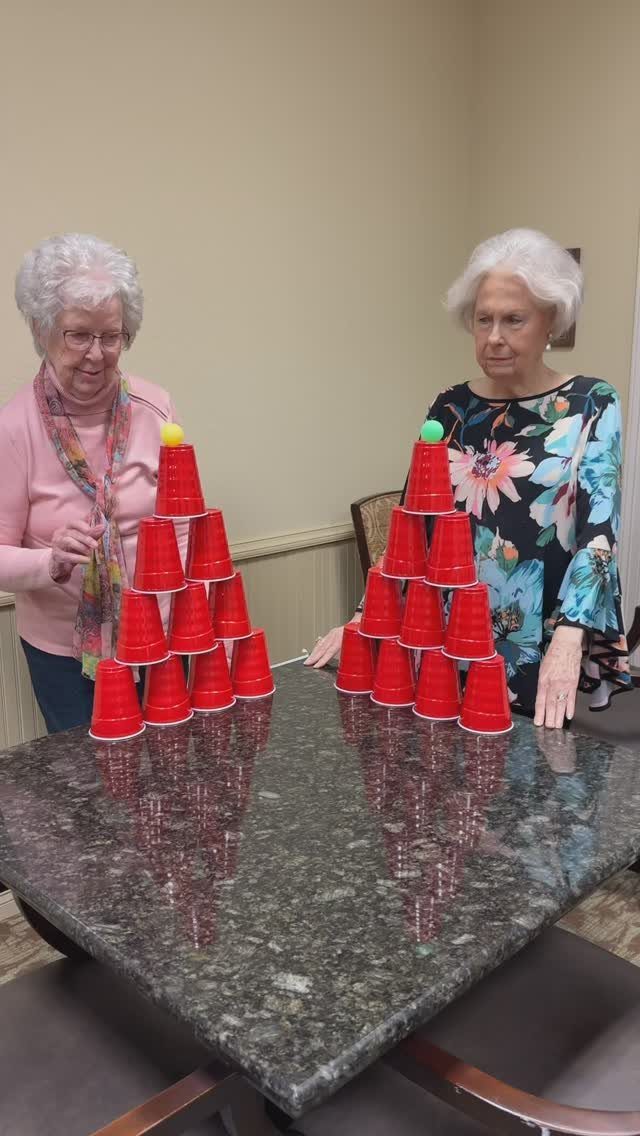
Red solo cups stacked into a pyramid, with a small ball on top, make a game that needs no explaining. Anyone who has seen a cup can play it.
Build 2 identical pyramids so players can race side by side or take turns.
Stand at a table, or let guests sit if standing tires them. Plastic cups cost little, and a few packs cover a whole party.
Keep the stacks low for a first round. Taller ones can come later, once everyone is warmed up.
2. Cardboard Tray Ball Balance
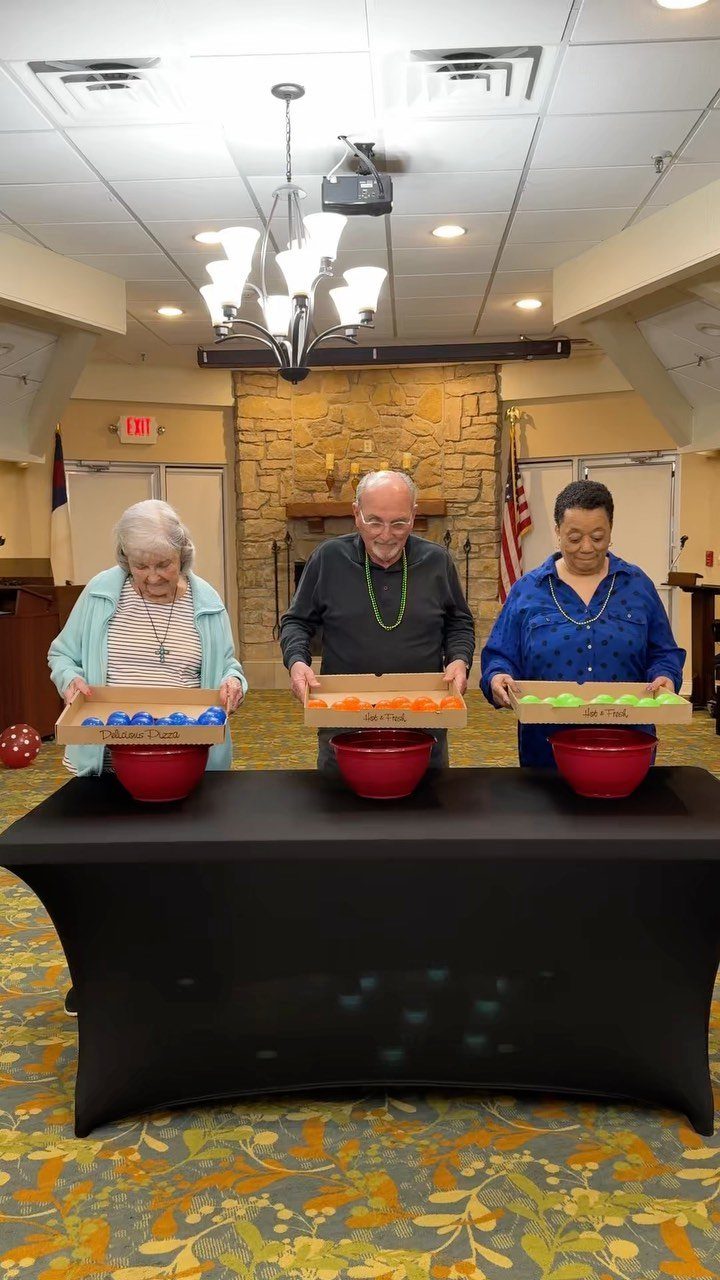
Shallow cardboard trays and a few colorful balls turn a table into a steady-hands challenge. Each player holds a tray over a bowl and tries to keep the balls from rolling off.
I like it for a mixed crowd because it asks for a calm grip, not speed or strength. Cut trays from sturdy cardboard, set one bowl per player, and give everyone the same number of balls so scoring stays simple.
Play standing or seated.
3. Giant Wooden Block Tower
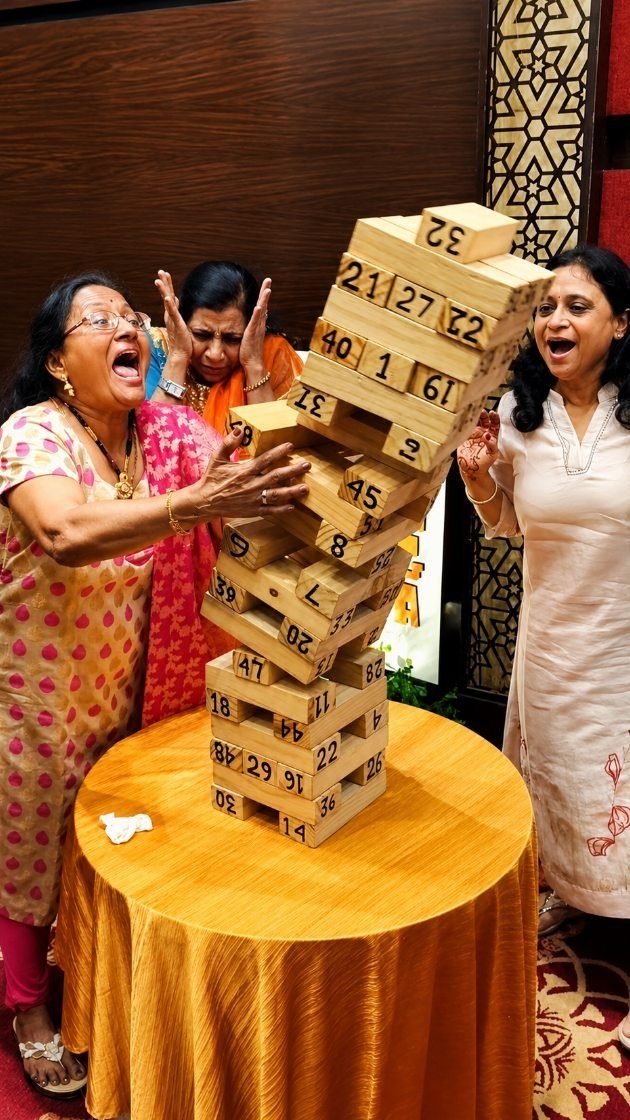
Numbered wooden blocks stacked into a tall tower make the suspense part of the show. Everyone watches one hand ease a block out, and the groan when it falls is half the fun.
Numbers add a twist: roll a die and pull the matching block. A sturdy table covered with a cloth also softens the crash.
This is the best game here for a group that wants to laugh together. Let people sit, and cheer on each turn.
4. Balloon Balancing on Cones
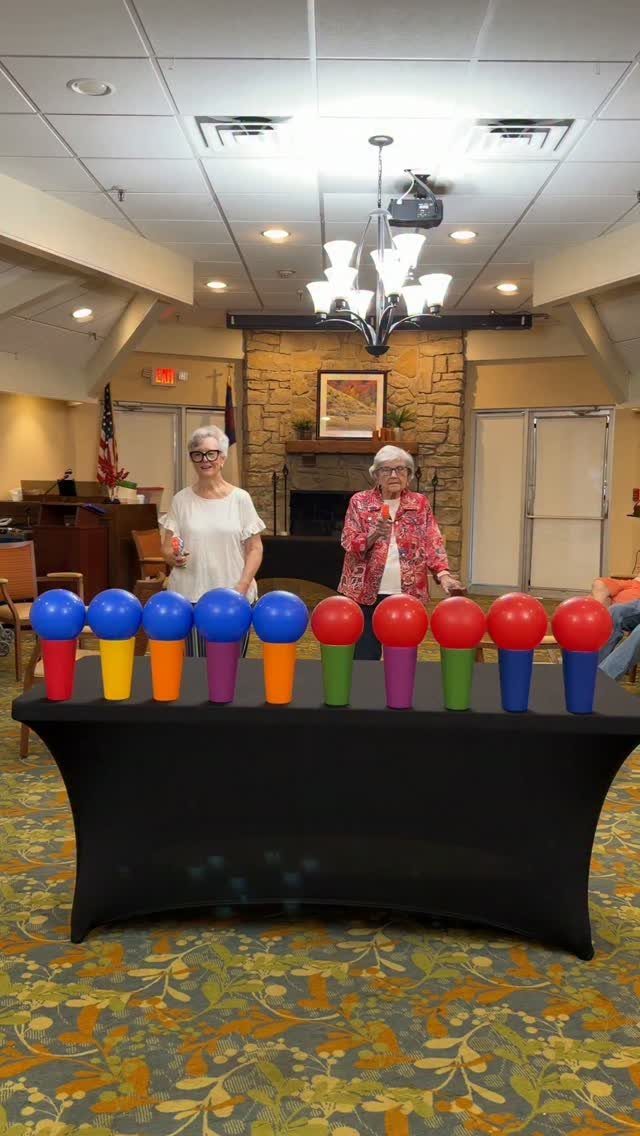
A row of small cones, each topped with an inflated balloon, sets up a game that looks silly and plays gently. Players try to keep the balloons balanced as they move along the table.
Balloons are light, so nothing hurts if one drops. Inflate them just before guests arrive, and keep a few spares since they pop easily.
Line the cones up along one table, and give each player a stretch of the row.
5. Tabletop Crossword Puzzle Game
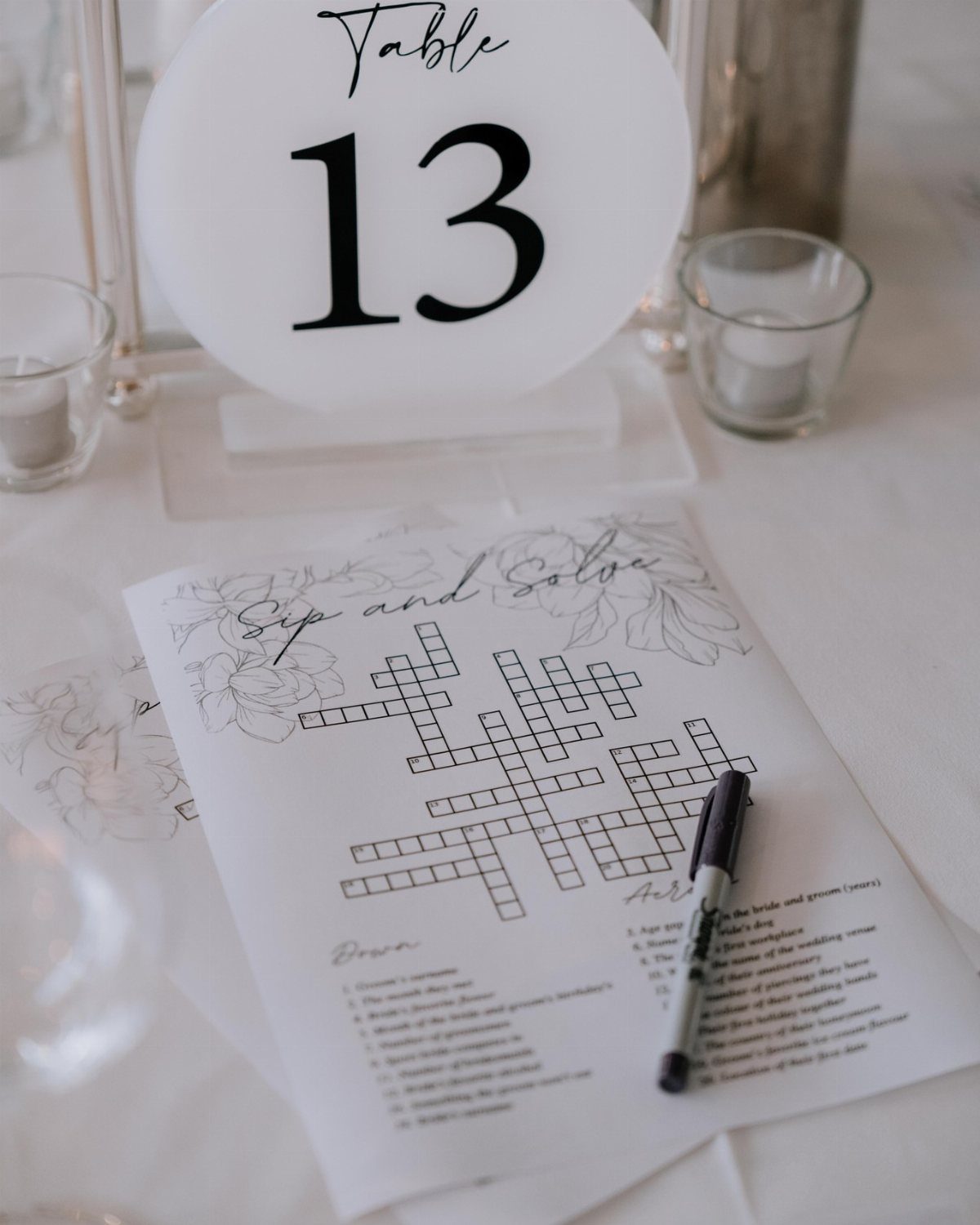
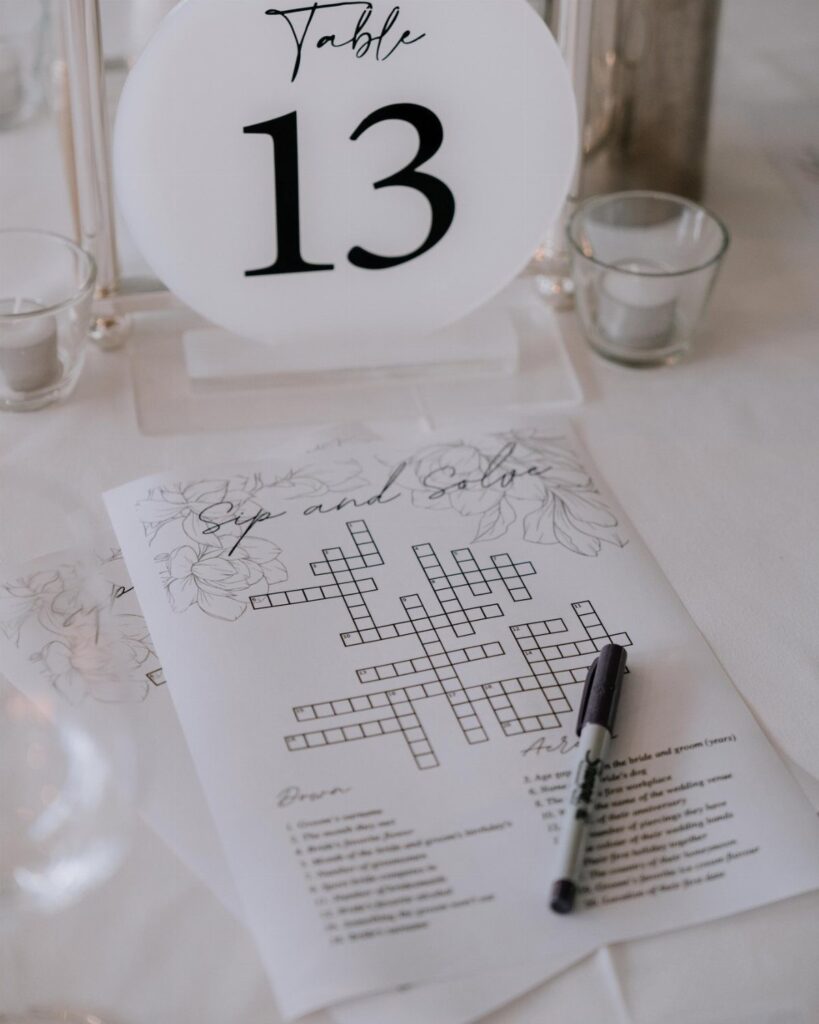
A printed crossword on a party table, with a black marker beside it, gives guests something to do between bites. Title it something playful, like "Sip and Solve."
Write the clues about the birthday guest: where they grew up, favorite songs, old jobs. Guests can work it out together, which suits quieter people who would rather skip anything physical.
Print it large, with big squares, so older eyes can read it without squinting.
6. Cardboard Sliding Cup Game
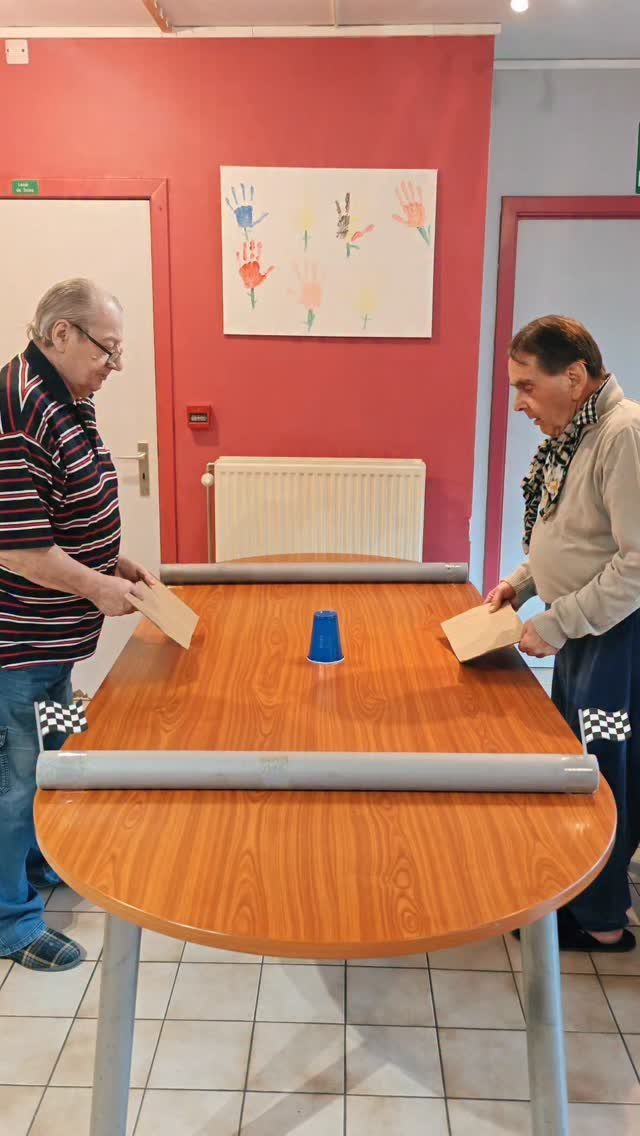
2 players face each other across a table and use flat pieces of cardboard to slide a plastic cup along a lane. Rails on both sides, such as PVC pipe, keep the cup from sailing off the edge.
The pipes make this more than a table trick, so set them up during your prep time. Sliding takes patience more than muscle, and I’d pick it for pairs who like friendly rivalry.
A wooden table gives the smoothest glide.
Choosing the Right Games
Before picking anything, think about how well the guest of honor sees and hears, since that decides which games will work.
Large print, louder sounds, and good lighting matter more than any clever rule twist, so check each game against the people actually coming.
Pick games that can be explained in a sentence or two. If someone has to ask twice how it works, it is too complicated for this crowd.
Mix the energy levels. Have one or two seated, low-effort options, one game that gets people talking, and one that exercises memory, such as a word puzzle or a recall challenge.
Guests can then pick what suits them instead of being pulled into something that doesn’t.
Gentle movement is fine, but keep it optional. Trivia and bingo work well because anyone can join from a chair.
Benefits of Party Games
Games do more than fill the hour between cake and gifts. Research from the National Institute on Aging links social engagement through group activities to a lower risk of cognitive decline and depression in older adults.
That is a good reason to treat the games as part of the party rather than an afterthought. Word puzzles and memory challenges give the mind some exercise, and a shared laugh around a table does the rest.
Bingo, trivia, and card games are the usual picks in senior living communities, which tells me how well they hold up with this age group.
Tips for Hosting Games
Test-run every game before the party. Explain the rules to a friend out loud, and if that takes longer than 90 seconds, cut it down until it fits.
Lean cooperative. Friendly teasing is fine, but team games spark conversation and keep anyone from being left behind, which a head-to-head elimination round rarely does.
Make props large and easy to grip, and give each team a name so the room has something to cheer for. Pairing a quieter guest with a talkative one usually balances a team better than letting people choose.